A complete strip and re-tile on a hipped property in Feltham, finished in Redland 49 interlocking tiles and dry fixed from ridge to eaves. This is the kind of job that looks straightforward once it's finished, but every decision on it was made to stop it failing in ten years' time.
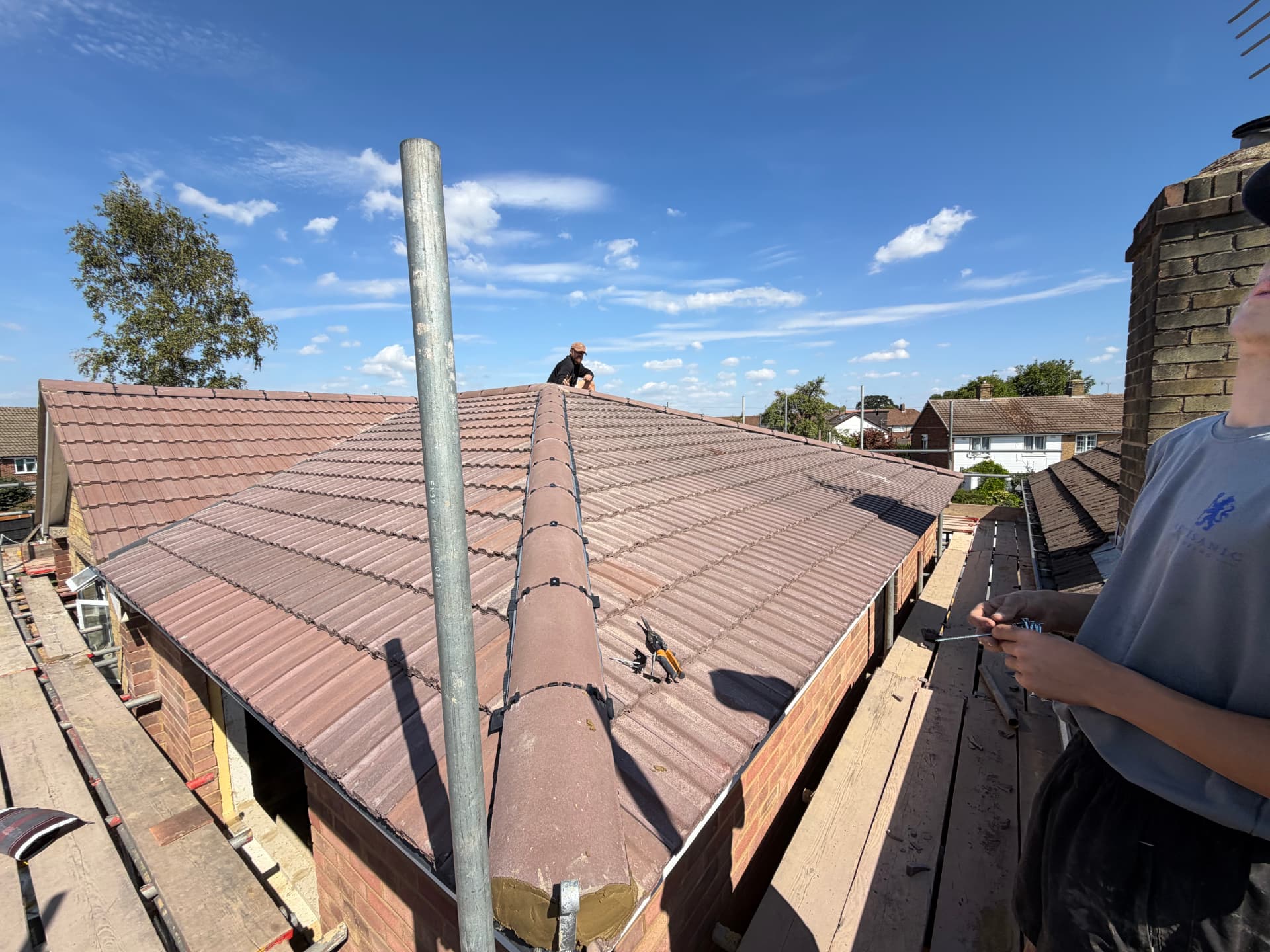
What we did. The old covering came off in full. Tiles, felt and battens were stripped back to the rafters, and the timbers were checked over before anything new went on. A strip-back to the bare timbers is the only honest way to assess what you're fixing to — you can't judge a roof's condition through a layer of old felt.
Breathable membrane. A breathable underlay was installed across the whole roof. It allows moisture vapour to escape from the roof space while keeping wind-driven rain out. No more bitumen felt sweating into the loft, which is one of the most common causes of damp in older properties that have been re-roofed in the past with the wrong underlay.
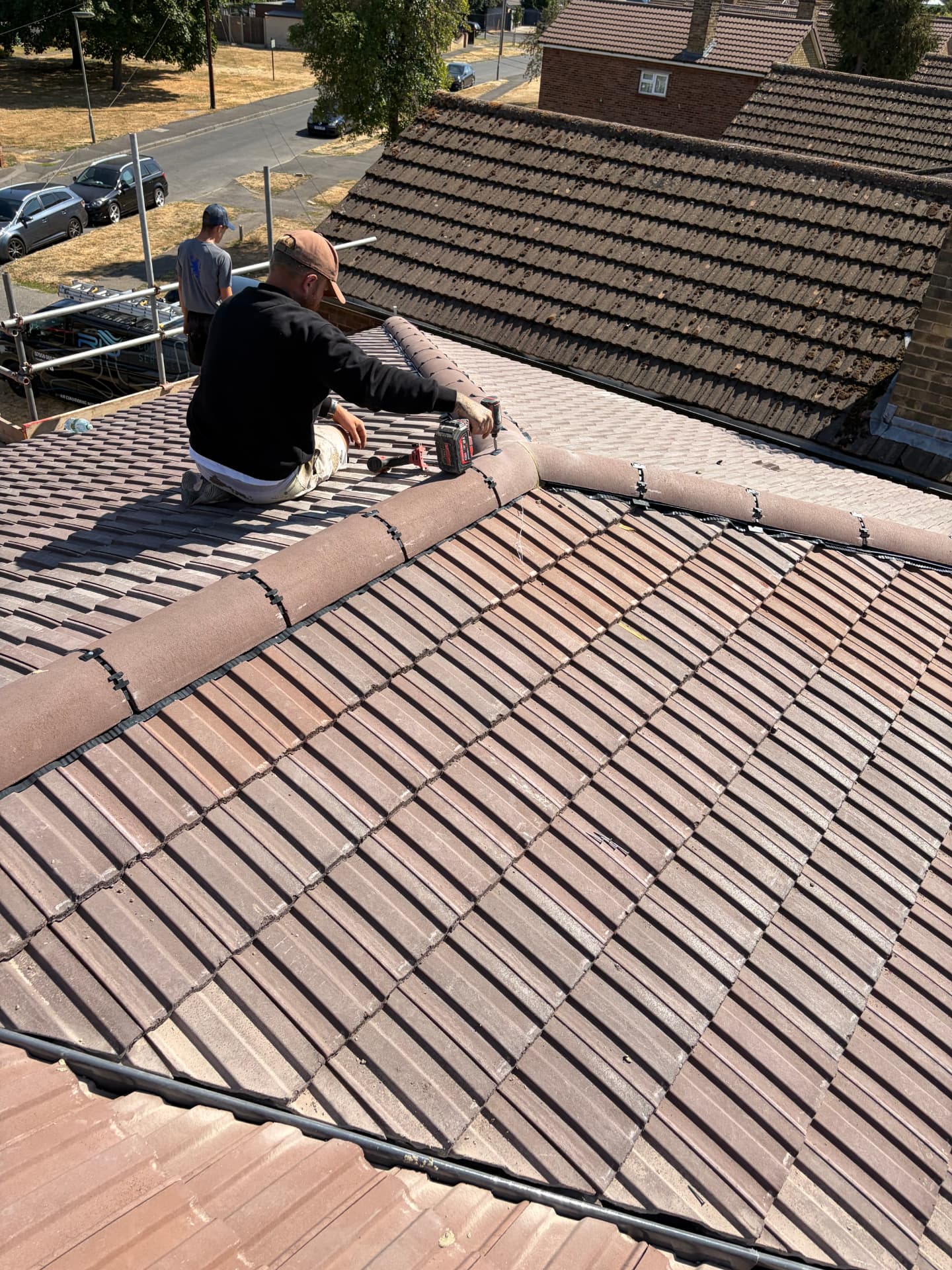
Treated 25x38 battens. Graded, treated timber battens, set out and gauged to the tile manufacturer's specification. Batten gauge isn't a guess — it's calculated from the tile's headlap and the pitch of the roof, and getting it wrong throws every course out of alignment.
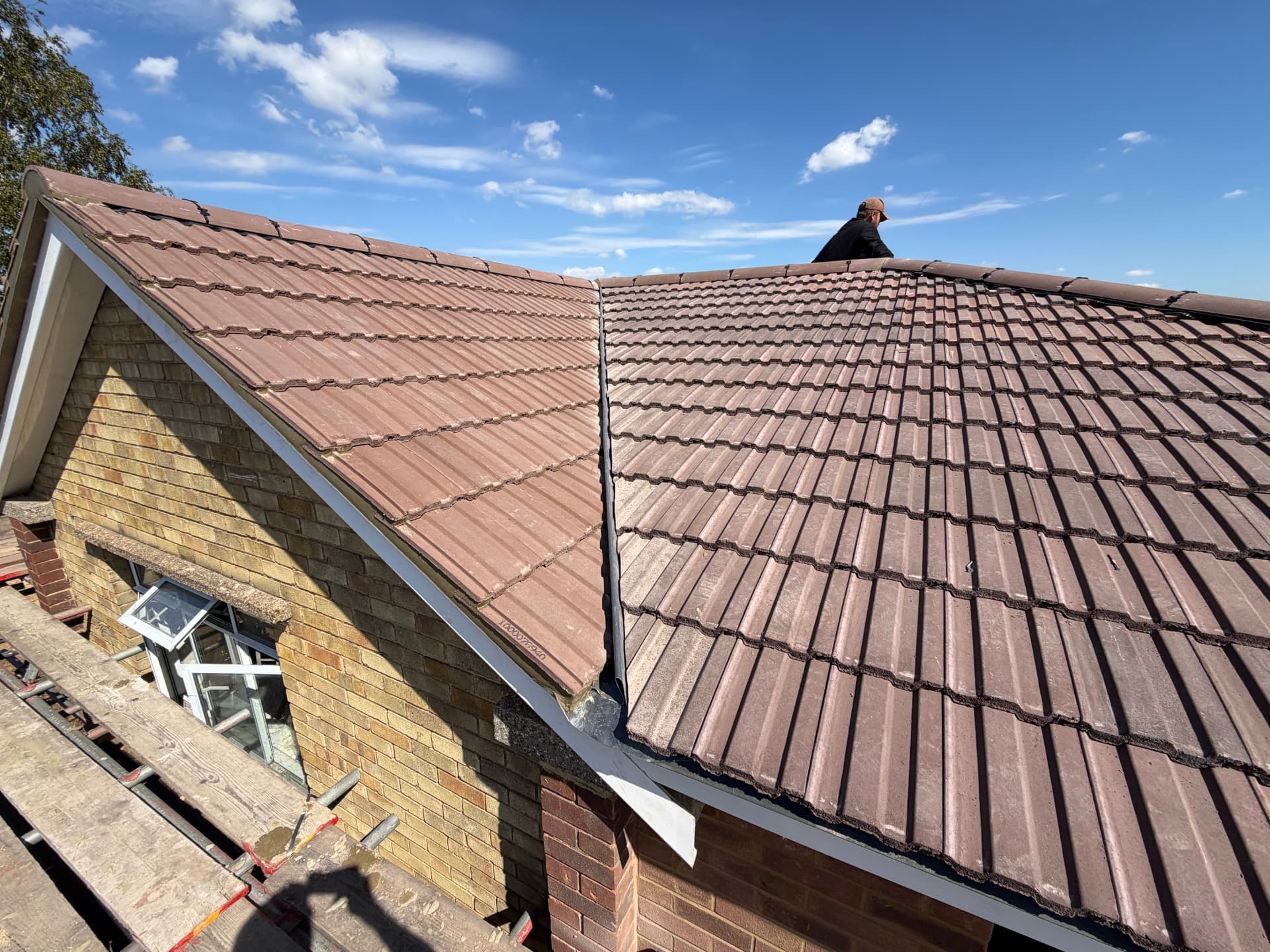
Over-fascia vent and eaves tray. At the eaves we fitted an over-fascia ventilator to give continuous airflow into the roof space, along with an over-fascia tray to support the membrane and carry water cleanly into the gutter instead of letting it run behind. Two small components that stop a lot of long-term problems — rot at the fascia, water tracking behind the gutter, and membrane sagging into the eaves where it holds water.
Redland 49 tiles. A proven interlocking concrete tile — strong, low-maintenance, and a match for the property and the surrounding street. Concrete interlocking tiles are the workhorse of British domestic roofing for a reason: they're robust, they're available, and when they're fixed to spec they last decades.
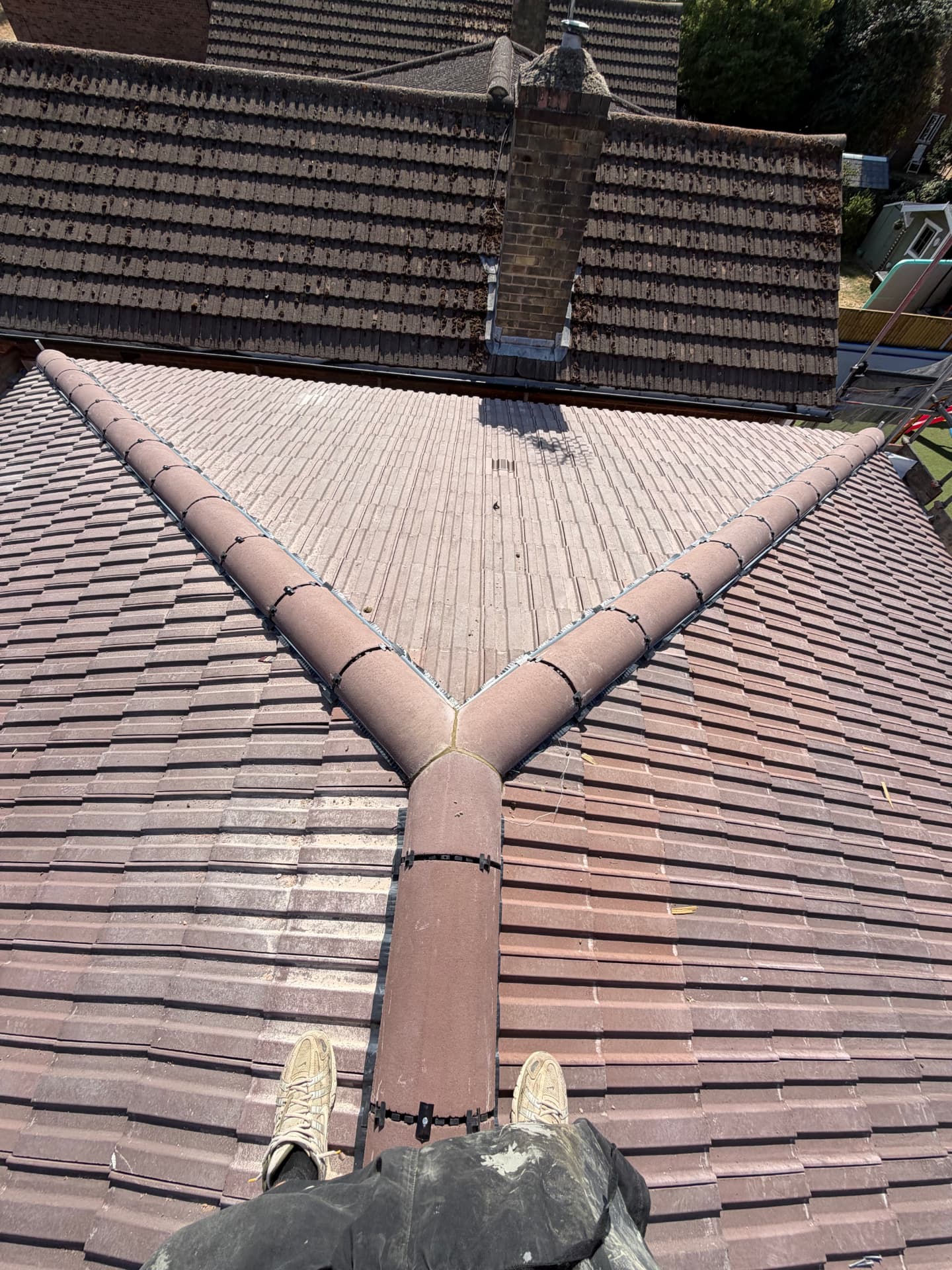
Dry ridge and dry hips. No mortar. Every ridge and hip tile is mechanically fixed with a dry system — a ventilated ridge roll and screwed union clips holding each tile down individually. There isn't a bed of mortar anywhere on this roof.
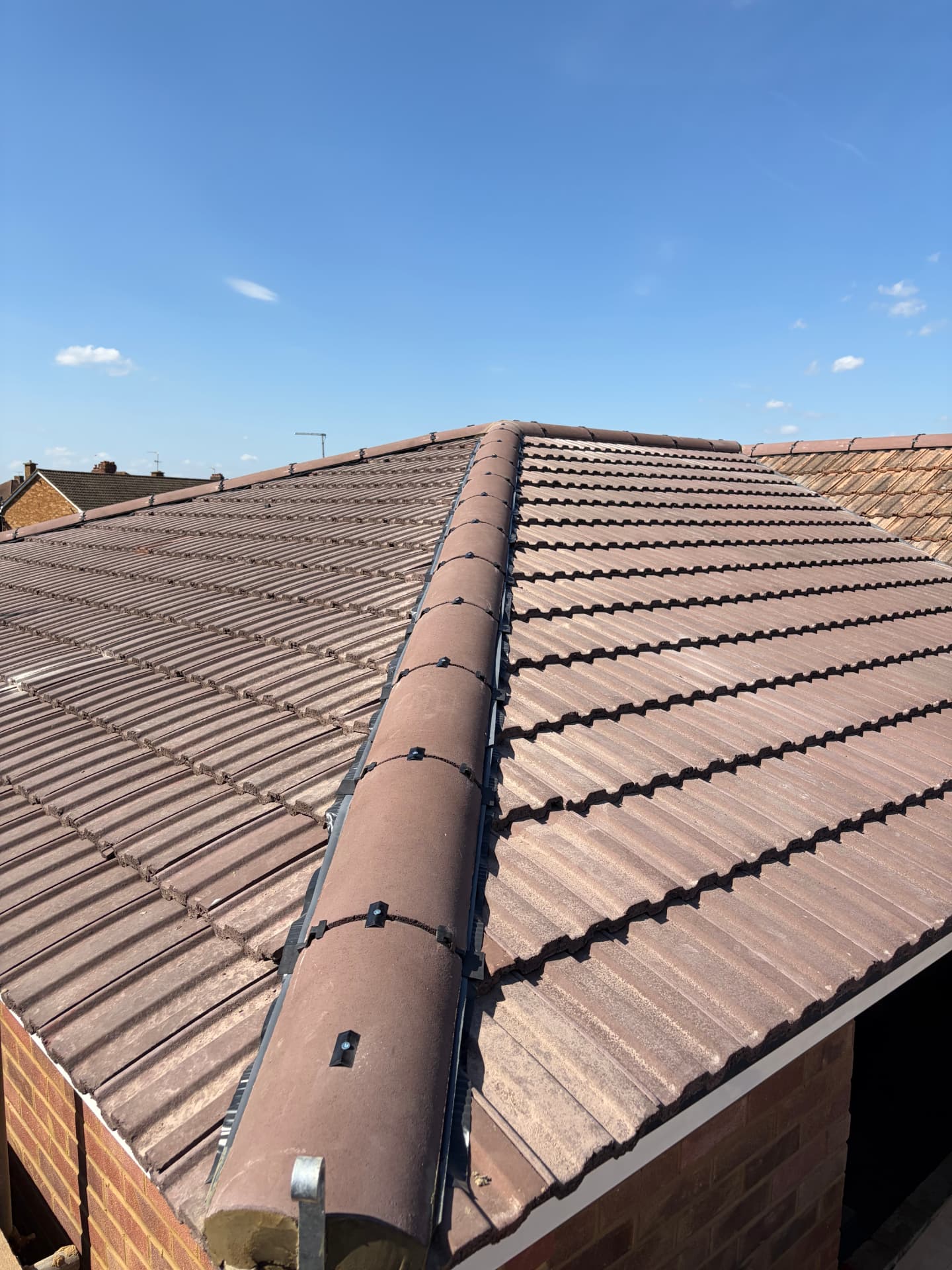
Why dry fix matters. Mortar-bedded ridges and hips are the single most common roof repair we get called out to. Mortar cracks, frost gets in, and eventually a ridge tile lets go — usually in the first proper storm of the winter, when the wind is coming from the worst direction and everyone's roofer is already busy.
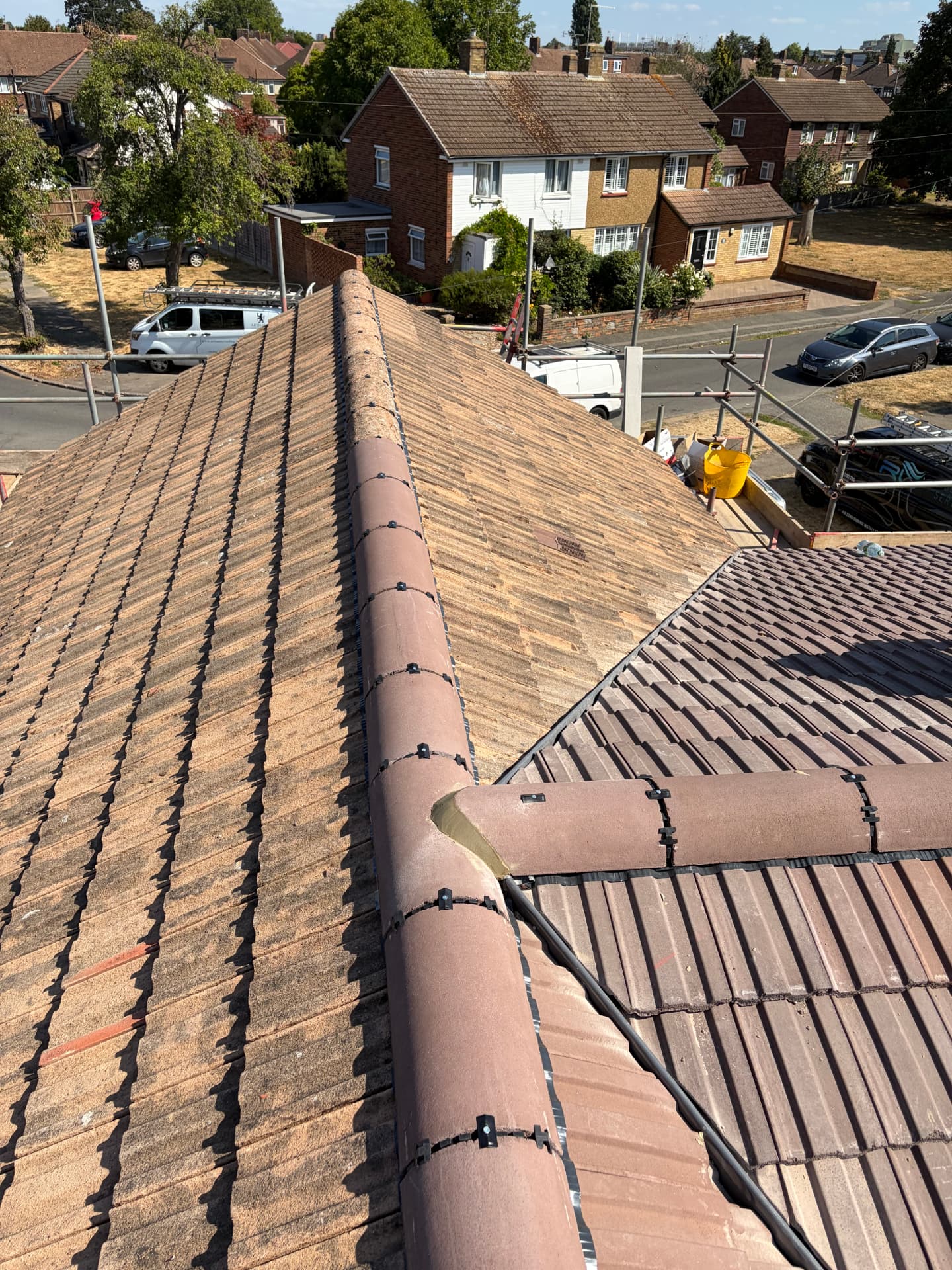
A dry fixed ridge and hip is mechanically held. It flexes with the roof, it ventilates at the same time, it needs no maintenance, and it won't need repointing in ten years. It's also now the standard required under BS 5534 for new work — a mortar-bedded ridge on a new roof simply isn't compliant anymore.
Combined with the ventilated eaves detail, the result is a roof that breathes properly and is fixed to current standard end to end. Strip, membrane, battens, tiles, dry ridge, dry hips — nothing on this roof was left to the weather.
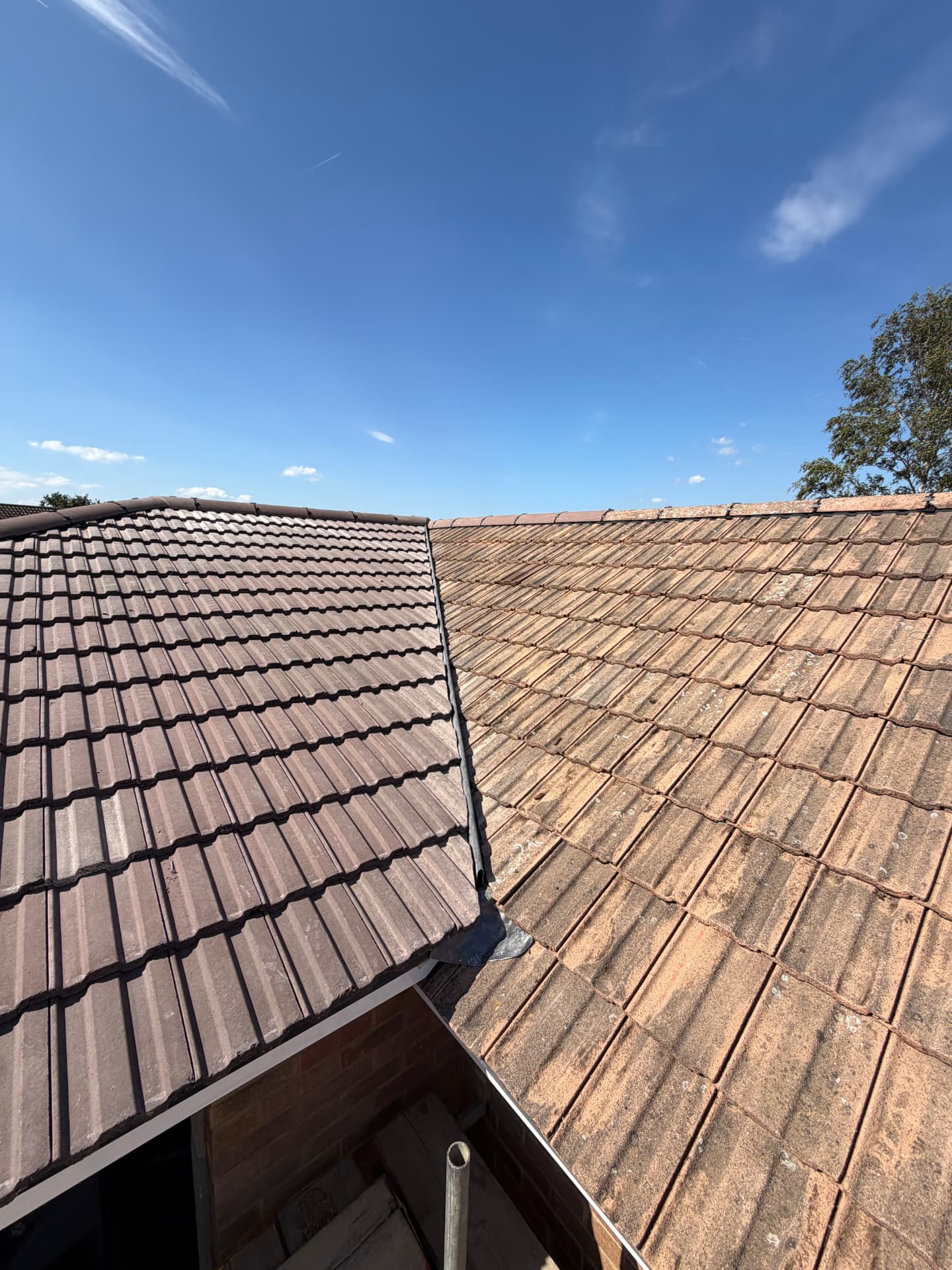
Full re-roofs like this carry our 10-year workmanship guarantee, backed by an Insurance Backed Guarantee. If your roof is reaching the end of its life — slipped tiles, cracking mortar at the ridge, sagging underlay — Artisanic Roofing covers Feltham, Berkshire and the wider South East.
Need expert advice on your roof?
Book a free no-obligation survey with our qualified team.
Book a Free Survey